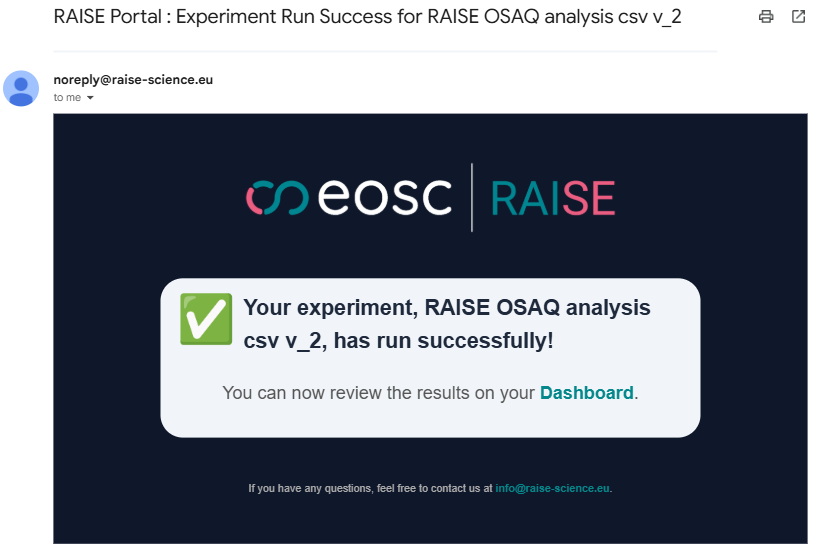

Experiment execution
What is an experiment?
An experiment is the execution of a script to one or more datasets. Each experiment provide an object with the results or the error occured during the preparation and execution of the experiment. To run an experiment the user has to select and existing (Menu>Projects) or create a new project and click on Run.
Create and Run an experiment
To create an experiment, the user (Experiment Owner) must select a script and one or more datasets from the corresponding lists. Users can choose from any scripts or datasets that:
- They own, or
- They have been granted access to, or
- Have been added to the project by other project collaborators. Items marked with a green icon indicate that the script or dataset has already been added to the project. Items marked with a red icon indicate that the user has access to them, but they have not yet been added to the project. When a user selects a script or dataset marked with a red icon, it is automatically added to the project.
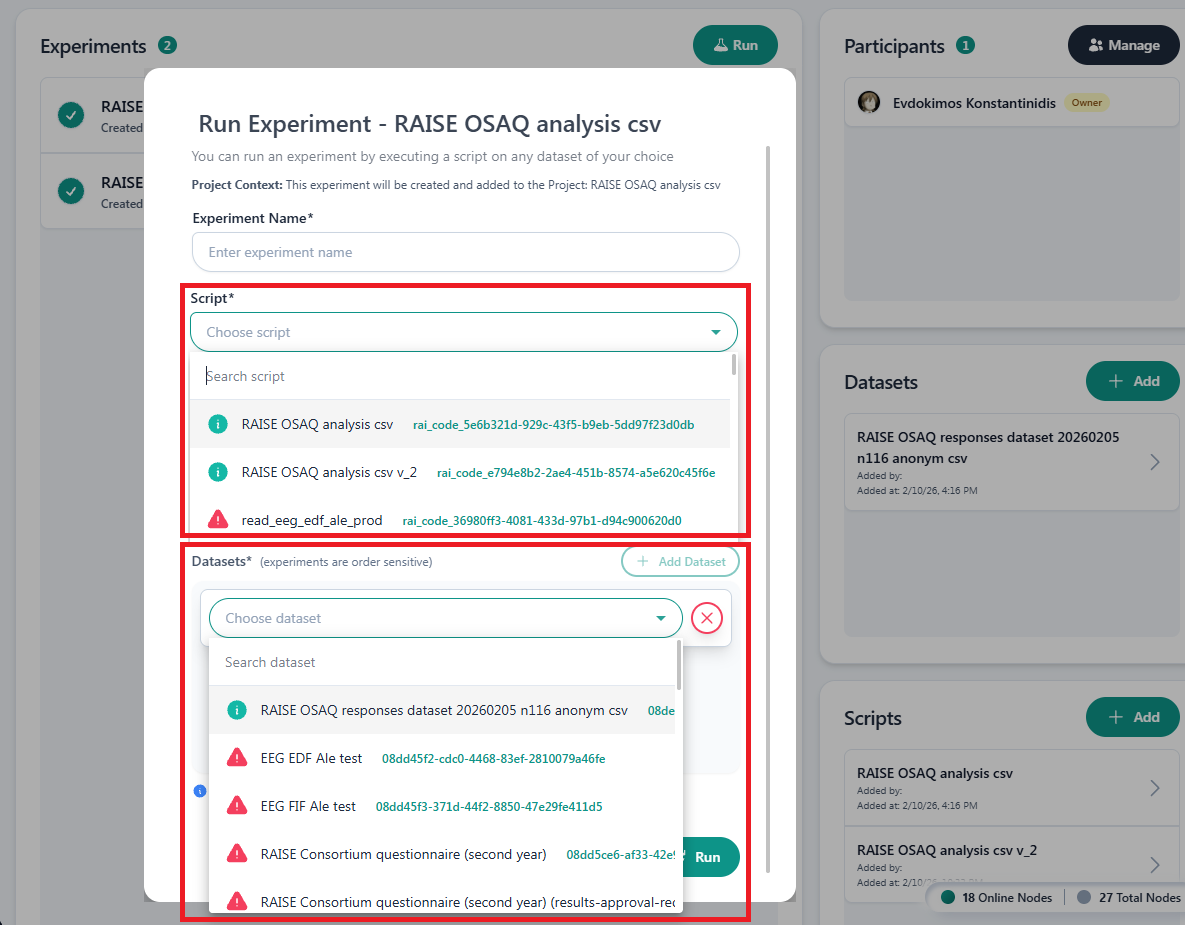
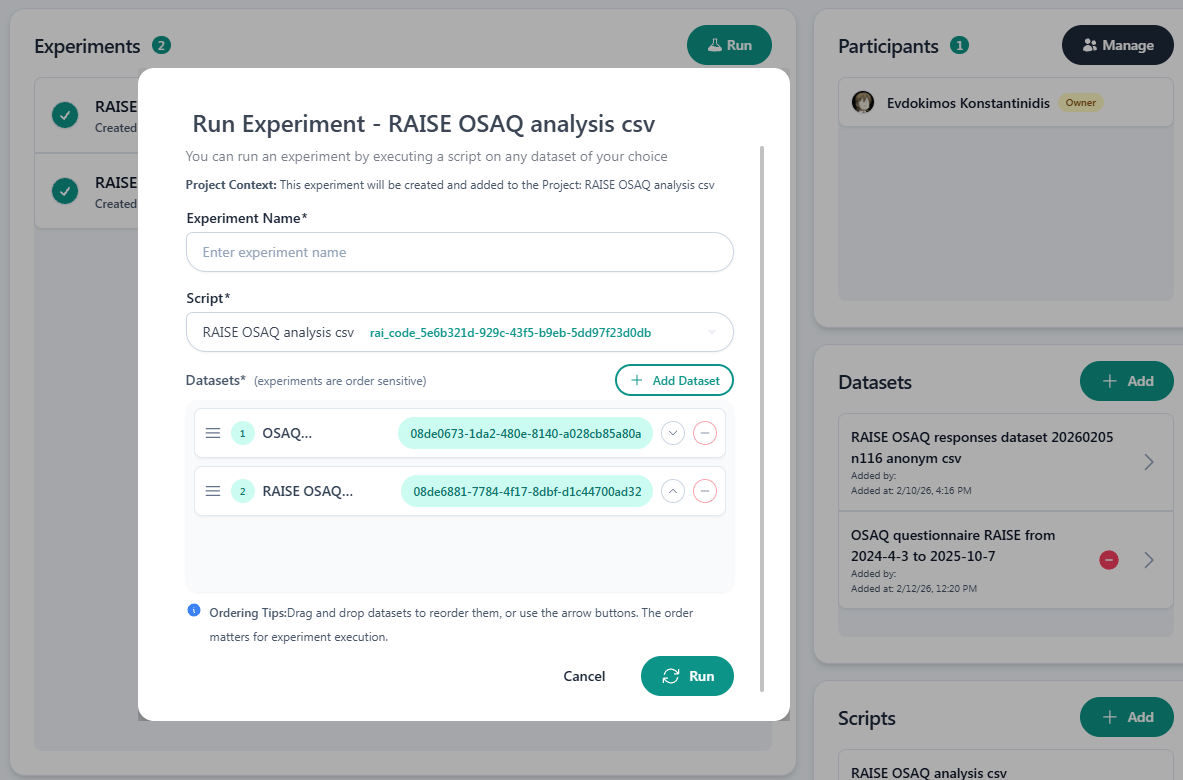
After selecting the script and dataset(s), the user can execute the experiment by clicking the Run button. Multiple datasets can be selected when the script requires more than one dataset as input. In such cases, the script processes the datasets in a specific order. Therefore, the datasets must appear in the experiment’s dataset list in the correct order. The user should ensure that the datasets are arranged properly before running the experiment, as the execution logic depends on this sequence.
When the experiment starts, the user can monitor the status of the experiment (Awaiting for execution, Running, Registered, etc.) or the reason in case of failure (Script Analysis Error, etc). In the case of error, the user can get more details on what didn’t work. If everything goes well, the experiment will be registered and the RAI Persistent Identifier (PID) (doi.org compatible) will be generated. The RAI contains the PIDs for all the involved datasets and scripts. All PIDs are doi.org compatible. The experiment’s RAI, together with a hash of the produced results, is then registered with the Blockchain Registration Service, ensuring that the execution is recorded with verifiable provenance and accountability.
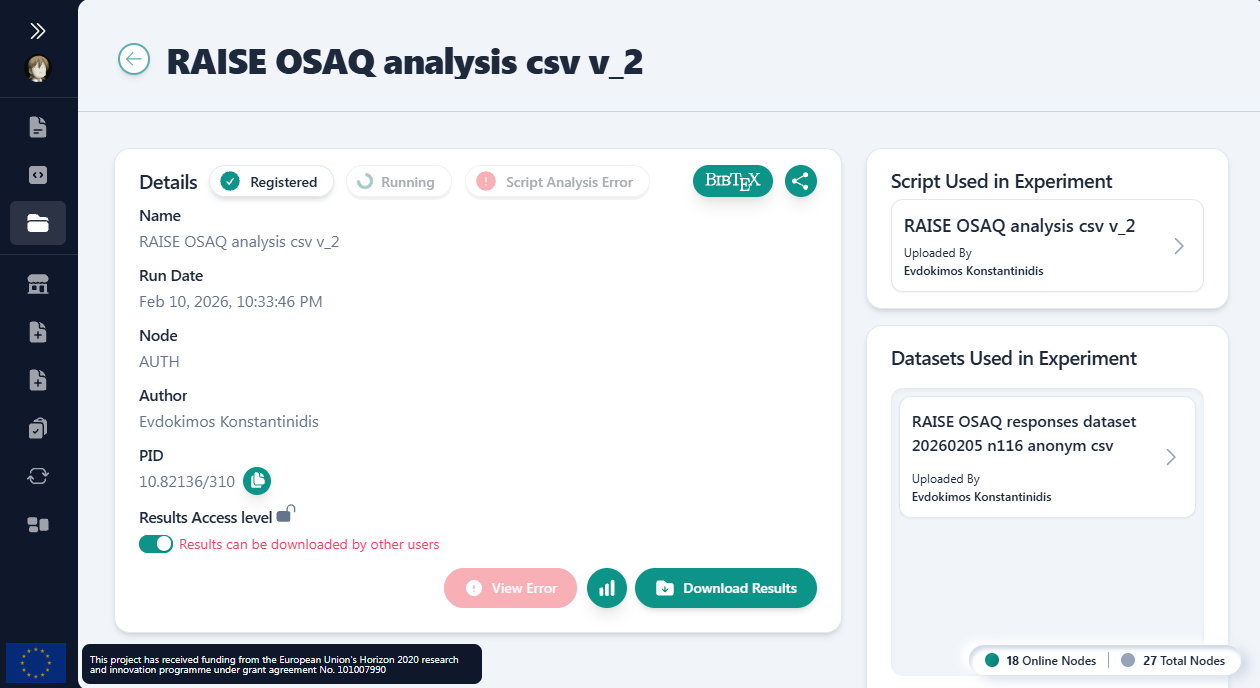
The experiment owner can select whether the results can be donwloaded by other registered users as well (to share results with others, paper reviewers, etc.)